Care
How to Burn a Candle Properly: The Complete Guide to a Clean, Even Burn
July 14, 2026 · 10 min read
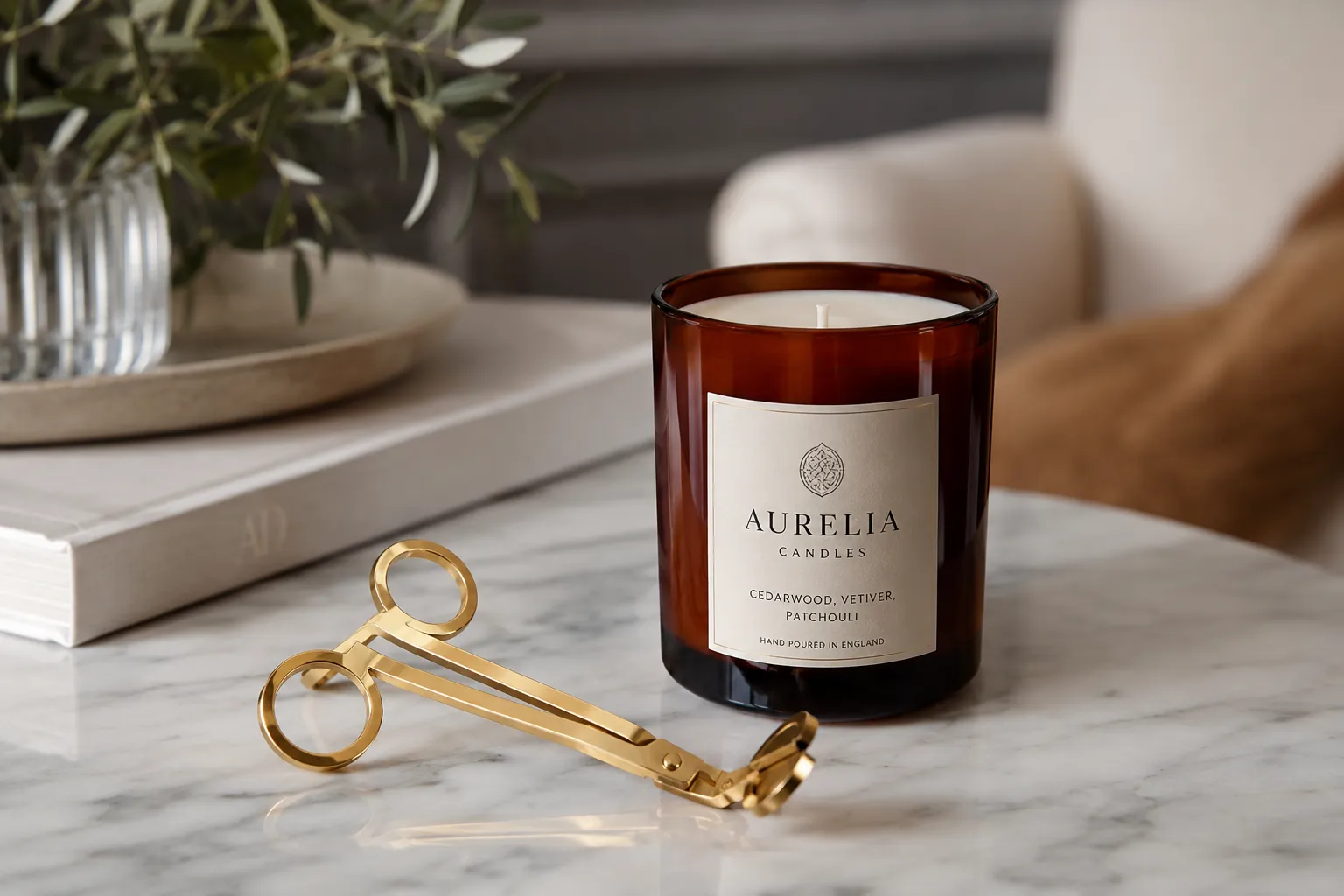
A good candle is a small luxury — and like most small luxuries, it rewards you for paying attention. Light one carelessly and it will tunnel down the middle, drown its own wick, and burn out with a thick ring of wasted wax still clinging to the glass. Light it well, and the same candle will give you every hour it was made for: a clean flame, a full melt pool, and fragrance that fills the room right down to the final burn. The good news is that burning a candle properly takes no special equipment and only a few minutes of care. This guide walks through everything — the first burn, wax memory, wick trimming, the four-hour rule, and how to rescue a candle that has already started to tunnel.
Why the first burn decides your candle's whole life
If you remember one thing from this guide, make it this: the very first time you light a candle matters more than any burn that follows. Candle wax has what makers call a "memory." The wax remembers how far it melted the first time, and on every future burn it will melt to roughly that same line — no further. Melt only a narrow well in the center on day one, and your candle will keep tunneling down that well for the rest of its life, no matter how patient you are later.
So the first burn is the one burn you should never rush. Give the candle enough uninterrupted time for the melted wax — the "melt pool" — to spread all the way to the edges of the vessel. For most jar candles that takes somewhere between two and four hours. It can feel like a long time to leave a candle going, but it is the single most important thing you can do to protect the candle you paid for.
The one-hour-per-inch rule
How long is long enough? Candle makers use a simple rule of thumb: burn for at least one hour for every inch of the candle's diameter. Measure across the top of the vessel and let that number be your minimum burn time.
- A 2-inch-wide candle — burn for at least 2 hours on the first light.
- A 3-inch-wide candle — give it around 3 hours.
- A wide, 4-inch bowl candle — you may need closer to 4 hours for a complete melt pool.
The rule is a guide, not a stopwatch — watch the wax, not the clock. The moment the entire surface has liquefied and the pool touches the glass all the way around, the first burn has done its job and you can put it out. If life gets in the way and you cannot commit two or three hours, it is genuinely better to wait and light the candle another day than to give it a rushed, partial first burn.
What about pillar and taper candles?
The first-burn rule is written for container candles — the jar and vessel candles most of us burn at home — because they rely on that full, even melt pool. Free-standing pillar candles are a little different: you actually want them to tunnel slightly, leaving a thin outer wall that glows translucent and holds the melted wax like a cup. Burn a pillar for about an hour per inch of diameter as well, but let that outer shell remain. Taper candles are simplest of all — just keep the wick trimmed and burn them upright, away from drafts, so they do not drip. The wick and draft rules below apply to every candle, whatever its shape.
What candle tunneling actually is (and why it wastes half your candle)
Tunneling is the direct consequence of ignoring the first-burn rule. Instead of melting evenly across the top, the flame burns straight down through the middle, leaving a deep, narrow tunnel with a thick wall of hard, untouched wax around it. Once that wall forms, it only gets worse: the recessed flame sits lower and lower, starved of oxygen, until it struggles to stay lit at all.
The cost is real. A tunneled candle can leave a third to a half of its wax stuck to the sides — fragrance and burn time you already paid for, thrown away. It also burns dirtier, because the sunken wick and shallow pool encourage smoking and soot. Preventing tunneling is not fussiness; it is simply getting what your candle is worth.
Trim the wick before every single burn
A long wick is the second most common reason a candle misbehaves. Left untrimmed, the wick grows a large, hungry flame that flickers, smokes, and throws soot onto the glass. Before every burn — not just the first — trim the wick down to about a quarter of an inch (roughly 5 mm). A short wick gives you a small, steady, upright flame that burns clean.
Cotton wicks vs. wood wicks
Cotton wicks are the classic. Trim them to a quarter inch and pinch away any blackened, mushroomed tip before relighting. Wood wicks — like those in some of our vessels — want to be kept even shorter, around an eighth of an inch, and you should gently snap or brush off the charred top layer once it has cooled. A wood wick that will not stay lit is almost always simply too long or crowned with old ash.
You do not need a special tool, though a wick trimmer makes it easy and keeps the trimmings from falling into the wax. Small scissors or even nail clippers work for cotton wicks. The one rule: always trim when the candle is completely cool and the wax has set, never over a warm melt pool.
The four-hour rule: why longer isn't better
If the first-burn rule is about burning long enough, the four-hour rule is about not burning too long. As a candle burns past three or four hours in one sitting, the wick starts to "mushroom" — building up carbon at the tip — and the vessel keeps absorbing heat until the glass itself can get uncomfortably hot. A mushrooming wick means more soot, a larger flame, and a less pleasant burn.
So enjoy your candle in sessions. After about four hours, extinguish it, let it cool completely, trim the wick, and relight later. Your candle will burn cleaner, your glass will stay safer, and the fragrance will actually perform better across many shorter burns than one marathon.
Snuff, don't blow
It is tempting to just blow a candle out — but a hard puff of breath sends hot wax spattering, produces that lingering smoky smell, and can bend or displace the wick so it burns off-center next time. A candle snuffer or a simple dip of the wick into its own melt pool (using a wick dipper, then straightening it upright) puts the flame out gently, with far less smoke and no mess. If you do blow it out, do so softly and from a little distance. And never use water to extinguish a candle — it can crack a hot glass vessel and cause the wax to spit.
Mind the draft: where you place a candle matters
A flame is only as steady as the air around it. Set a candle near an open window, a fan, an air-conditioning vent, or a busy doorway, and the moving air pulls the flame to one side. That lopsided flame melts one wall of wax faster than the other, and you end up with an uneven burn and more soot — even if you did everything else right.
Place your candle on a level, heat-safe surface, away from drafts and out of the reach of curtains, pets, and anything flammable. Keep it out of direct sunlight when it is not lit, too: sunlight fades both the color and the fragrance oils over time. A still, shaded spot is where a candle burns at its most beautiful.
How to fix a candle that's already tunneling
Caught it early? A candle with only shallow tunneling can often be corrected with one long, attentive burn — light it and let it go until the pool finally reaches the edges. For a more stubborn tunnel, two gentle rescue methods work well:
- The foil method. Light the candle, then loosely tent a piece of aluminium foil over the top, leaving a hole in the center for the flame and air. The foil traps heat and reflects it down onto the hard ring of wax, melting it back to level over the next hour or two. Watch it the whole time and remove the foil once the surface has evened out.
- The hair-dryer (or heat-gun) method. With the candle unlit, warm the wax surface with a hair dryer on a low setting, holding it back far enough that you do not spatter wax. As the top layer softens, it self-levels and melts the leftover wall down. Let it re-set flat, trim the wick, and your next burn starts fresh.
Both methods smooth the surface so future burns can reach the glass again. They cannot recover wax that has already burned away, but they can stop a young candle from being written off — and get it back to burning evenly.
Why is my candle smoking or leaving black soot?
A little smoke when you extinguish a candle is normal; a candle that smokes while burning, or leaves a black ring of soot inside the glass, is telling you something. Nine times out of ten the cause is a wick that is too long, so the flame is larger than it should be and burning fuel incompletely. Trim it to a quarter inch and the smoke usually stops immediately.
The other usual suspects are drafts — moving air makes the flame flicker and soot — and fragrance or wax pooling too deep after a very long burn. If soot has already built up on the glass, let the candle cool completely, then wipe the inside rim with a dry paper towel before the next burn. Keep the wick trimmed, keep it out of the draft, and keep sessions under four hours, and a clean candle stays clean.
The most common candle-burning mistakes
Almost every candle problem traces back to one of a handful of habits. If your candles never seem to last, tunnel, smoke, or smell as strong as you hoped, check this list first — the fix is usually simple:
- Cutting the first burn short. The single most common mistake, and the cause of most tunneling. Always melt to the edges on burn one.
- Never trimming the wick. A long wick means a big, smoky flame, soot on the glass, and a faster, dirtier burn.
- Burning for too long in one sitting. Past four hours the wick mushrooms and the vessel overheats. Burn in sessions.
- Placing the candle in a draft. Moving air makes the flame lean, melting one side unevenly and creating soot.
- Blowing it out hard. This spatters wax, smokes, and knocks the wick off-center. Snuff it instead.
- Burning it to the very bottom. Stop when about half an inch of wax remains to avoid overheating the base of the vessel.
A quick candle-safety checklist
- Never leave a burning candle unattended, and extinguish every candle before you leave the room or go to sleep.
- Keep candles at least a few inches apart so they do not heat one another.
- Burn on a stable, heat-resistant surface, away from drafts, curtains, children, and pets.
- Stop burning when about a half-inch of wax remains at the bottom — burning to the very end can overheat the vessel.
- Let the candle cool fully before touching, moving, or re-trimming it.
Getting every last hour from your Aurelia
None of this is complicated — it is just attention. Give the first burn its full melt pool, trim the wick before every light, keep sessions under four hours, snuff rather than blow, and keep the flame out of the draft. Do that, and a well-made candle will reward you with a clean, even, fragrant burn from the first light to the last.
Every Aurelia candle is hand-poured to burn slow and clean, and each one ships with its own care notes. If you would like to put this guide into practice, explore our jar candle collection or browse the full range of scented candles — and for more on how fragrance unfolds as a candle burns, read Fragrance Notes Explained.
Frequently Asked Questions
How long should I burn a candle the first time?+
Long enough for the melted wax to reach the edges of the vessel — usually two to four hours. A good rule is one hour of burning for every inch of the candle's diameter. This full first melt pool prevents tunneling for the life of the candle.
Why does my candle tunnel down the middle?+
Tunneling happens when the first burn was too short, so the wax only melted a narrow well in the center. Because wax has a "memory," it keeps melting along that same line, leaving a wall of unused wax around the edge. Always give the first burn a full, edge-to-edge melt pool.
How often should I trim the wick?+
Before every single burn. Trim cotton wicks to about ¼ inch and wood wicks to about ⅛ inch, always when the candle is cool. A trimmed wick gives a smaller, cleaner flame with far less soot and smoke.
Is it bad to burn a candle for too long?+
Yes. Beyond about four hours the wick mushrooms, the flame grows, soot increases, and the vessel can overheat. Burn in sessions of up to four hours, then extinguish, cool, trim, and relight later.
Should I blow out a candle or use a snuffer?+
Use a snuffer, or dip the wick into its own wax and straighten it. Blowing sends up smoke, can spatter hot wax, and may knock the wick off-center. Never use water to put out a candle.
Can I fix a candle that has already tunneled?+
Often, yes. Try the foil method — tent foil over the top with a hole for the flame to trap heat and melt the leftover ring — or gently warm the surface with a hair dryer on low until it self-levels. Then let it set flat, trim the wick, and burn as normal.