Luxury
What Makes a High-Quality Luxury Candle Worth the Investment
July 6, 2026 · 9 min read
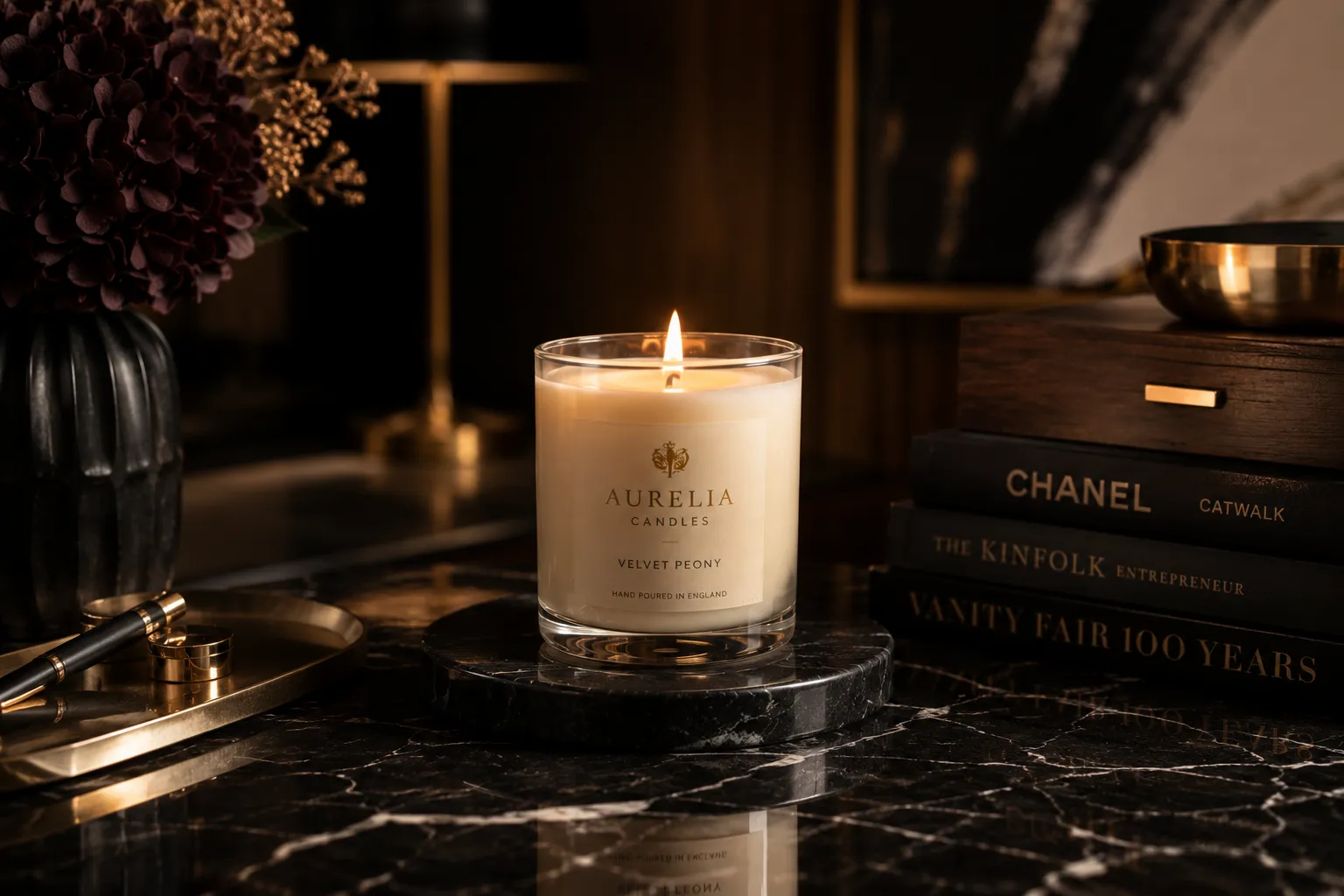
A candle that costs $75 and a candle that costs $12 are not the same product in different packaging. The gap reflects real, specific differences in ingredients, craftsmanship, and performance that show up every time you light the candle. This article explains exactly what makes a luxury candle worth spending money on — what you are buying when you pay a premium, where that premium shows up in daily experience, and how to identify a genuinely high-quality candle rather than an expensively packaged average one.
The luxury candle market has grown significantly, which means it now contains both genuinely exceptional products and expensive products that are not actually better than what you can buy for half the price. Knowing the difference requires understanding what the quality markers actually are — not the packaging, not the brand name, but the wax, the fragrance, the wick, the burn performance, and the integrity of the maker.
The core components of a high-quality candle
Every candle has four primary components: the wax, the fragrance, the wick, and the vessel. In a luxury candle, all four are chosen for quality rather than cost. In a budget candle, all four are chosen for margin. The difference compounds — a bad wax choice compromises fragrance release, a poorly sized wick compromises the burn, and a thin vessel compromises safety. A quality candle gets all four right, and the combined effect is a product a cheap candle simply cannot match. A beautiful label and a high price are not quality markers. The ingredient list is.
What to look for in a luxury candle
These are the quality indicators that separate a genuinely excellent candle from an expensively priced mediocre one.
Natural wax with full disclosure
A luxury candle uses soy, coconut, beeswax, or a blend of these natural waxes — they burn more cleanly, produce less soot, and release fragrance more evenly than paraffin. The brand should state the wax type clearly. If they describe it vaguely as a "premium wax blend" without specifics, be skeptical. Genuine quality brands have nothing to hide about their wax. (Here is the full soy vs. paraffin comparison.)
High fragrance load with clean oils
Fragrance load — the percentage of fragrance oil in the wax — is the single biggest determinant of how well a candle scents a room. Luxury candles use 8 to 12 percent; budget candles use 3 to 6 percent to reduce cost. The type of oil matters too: look for phthalate-free fragrance oils, which go through more rigorous safety testing. Some luxury candles use natural essential oils, which have a softer throw and are a quality marker primarily in wellness-oriented products.
Cotton or wood wick
The wick tells you a lot about a candle's quality intentions. Cotton wicks burn cleanly and are biodegradable; wood wicks produce a subtle crackle, burn evenly, and deliver excellent throw. Both are far better than metal-core wicks, which are used in cheap candles to hold the wick upright but can introduce metallic compounds into the burn. Any luxury candle worth its price has a cotton or wood wick, period.
Proper burn testing by the maker
A quality maker tests every new formula through multiple burn cycles before release — checking that the wick size suits the vessel, that fragrance performs consistently from first burn to last, that it does not tunnel or over-soot, and that the container does not overheat. Evidence of testing includes clearly stated burn times, wick-trimming instructions on the label, and a brand that answers specific questions about their process. It is invisible in the product but shows up in how confident and transparent the brand is.
A vessel worth keeping
Luxury vessels are designed to be kept after the wax is gone — heavy glass, ceramic, concrete, and metal that serve a second life as storage, a planter, or décor. This changes the value calculation: a candle in a beautiful vessel that becomes a permanent fixture has a different cost-per-value than one in glass you recycle. Our Luxe Crystal Jar Set and Luxe Wood Bowl Candle are built exactly this way. When evaluating a candle, ask whether you would want the vessel afterward.
Complexity and development in the fragrance
A luxury fragrance is not one-dimensional. It has top notes that appear when the candle first burns, middle notes that emerge as the wax melts, and base notes that deepen and linger. This development — the fragrance changing as it burns — is what differentiates a quality scent from a simple oil. Cheap candles smell the same from first to last because the fragrance is a single synthetic note. Our guide to fragrance notes from top to base explains how this works.
What luxury candles are not worth paying for
The market also contains products that charge premium prices for packaging, brand names, and marketing rather than ingredient or performance quality. A candle in beautiful packaging with a French-sounding name that contains paraffin, a synthetic fragrance at 5 percent load, and a metal-core wick is not a luxury candle regardless of price. The ingredient-disclosure test cuts through this immediately: if a brand in the $60 to $80 range will not tell you their wax type, fragrance load, and wick material, they are selling brand value rather than product quality.
How to calculate real value
The best way to assess value is cost per burn hour: price divided by stated burn time. A $70 candle with 65 hours costs $1.08 per hour; a $15 candle with 30 hours costs $0.50 per hour. The luxury candle is more expensive per session, but the gap shrinks once you factor in superior fragrance throw, a cleaner burn, and the value of a keepable vessel. For engaged candle users, the premium is genuinely worth it; for occasional users, the budget candle may be the rational choice. Knowing your own habits helps you decide honestly — and you can browse Aurelia's range in our scented candle collection.
Frequently Asked Questions
How can I tell if a candle is genuinely luxury or just expensive?+
Check the ingredient disclosure first — a genuine luxury candle lists its wax type, fragrance type, and wick material clearly. Then check the burn time (a luxury 10-ounce candle should deliver at least 55 hours), look for reviews that mention burn performance, and evaluate the vessel. If a candle fails on ingredients, burn time, or vessel quality, it is not luxury regardless of price.
Why do some luxury candles have a weak scent?+
Either the fragrance load is lower than it should be for a premium product, or the candle needs more burn time to reach a full throw. Some natural fragrance formulations have a softer throw by design. If a luxury candle consistently fails to fill a room after 30 minutes, the fragrance load is likely at the low end — try it in a smaller room before writing it off.
Are there luxury candle brands that are actually worth the money?+
Yes, many. The key is looking past brand fame and evaluating the product on its merits. Well-regarded independent makers using natural waxes, high fragrance loads, and clearly disclosed ingredients consistently outperform famous lifestyle brands on actual quality. Start with one candle to evaluate before committing to a collection.
What burn time should I expect from a luxury candle?+
A 10-ounce luxury soy or coconut candle should deliver 55 to 70 hours; a 16-ounce candle 80 to 100. These assume correct habits: a full melt pool on the first burn, wick trimmed to about ¼ inch, and sessions of two to four hours. Candles burned incorrectly — especially those that tunnel — always underperform their stated burn time.
Is the vessel an important part of a luxury candle's value?+
Yes, for buyers who will use it afterward. A quality ceramic, concrete, or heavy-glass vessel has genuine utility once the candle is finished — as a planter, storage, or organizer — which changes the effective price. A $70 candle in a vessel worth $20 has a real candle cost of $50. If you will keep and use the vessel, it changes the value math significantly.